
Luxury Branding: Identity and Aesthetic Coherence
How to preserve visual coherence and narrative across all touchpoints to strengthen engagement and brand value.
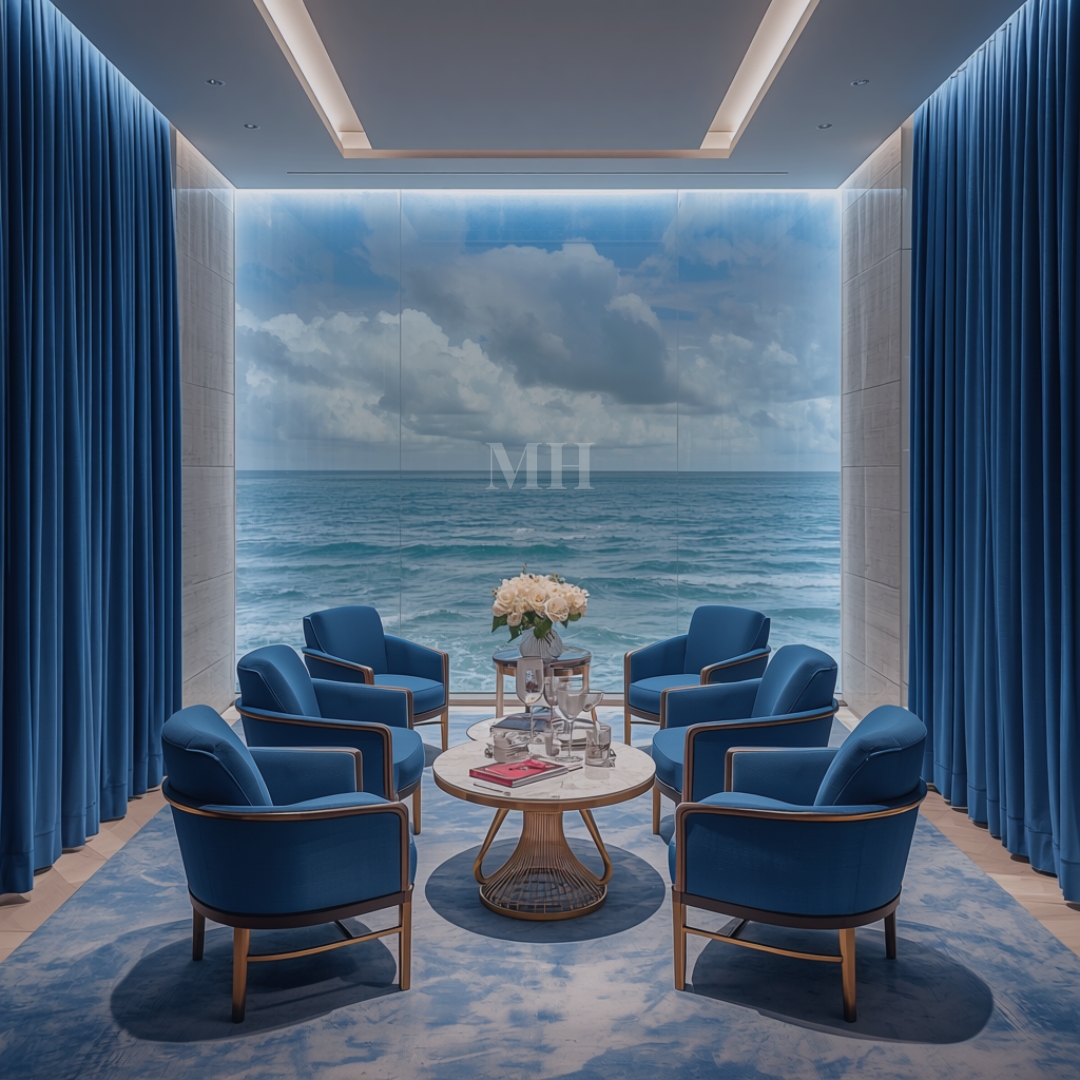
In the contemporary luxury universe, exclusivity is no longer limited to the rarity of an object or the prestige of a logo; it is built through a complete experience: a succession of visual signals and sensory narratives that allow the brand to be recognised long before it is named.
Today, the client relates to a house through a fluid and non-linear journey: they may discover a collection on social media, request information via private messaging, visit a boutique, receive a physical invitation, attend an exclusive activation and resume the digital conversation days later.
Digitalisation, new social media formats and Artificial Intelligence (AI) have influenced the distribution and diffusion strategies of fashion, luxury and lifestyle houses. Deloitte describes this new scenario as an engagement ecosystem in which experiences must travel with the consumer across platforms while, at the same time, remaining unequivocally aligned with the brand1.
In this context, aesthetic coherence and narrative cease to be a matter of "graphic control" and become a strategic discipline. Each touchpoint confirms —or contradicts— the value promise. When all channels express the same essence, the brand gains recognition, credibility and emotional depth; but when ruptures or inconsistencies appear (however small), the perception of excellence that sustains luxury is weakened.
"In luxury, coherence does not consist in repeating a form, but in preserving a meaning." - MH
Consistency is not uniformity
A coherent brand does not behave identically across all channels; it behaves recognisably. Uniformity reproduces the same codes without considering context; coherence, on the other hand, protects a core identity and translates it with sensitivity to each medium, moment and audience.
The website may be silent and editorial; a private dinner, intimate and sensory; an installation, bold and monumental. All three expressions can belong to the same universe if they share a vision, an aesthetic hierarchy, a language and a way of making the client feel. The strategic question is not "does everything look the same?", but "does everything convey the same brand truth?".
This distinction is particularly relevant in a sector undergoing a period of greater demand. Bain & Company and Fondazione Altagamma note that the performance of luxury brands has become polarised and recommend restoring creativity, quality and purpose as non-negotiable pillars, alongside rigorous investment in brand storytelling2. In other words, sustainable differentiation is not achieved by increasing the volume of messages, but by refining their meaning and execution.
Storytelling as engagement architecture
In luxury, the narrative is not an editorial complement; it is the architecture that connects origin, product, culture and desire. A well-defined story allows campaigns, spaces, services and experiences to appear as chapters of the same evolving universe.
Research by Crespo, Ferreira and Cardoso shows that storytelling can improve identification between consumer and brand, stimulate affective involvement and influence behavioural responses through cognitive and emotional mechanisms3. For luxury brands, this implies that narrative coherence not only fosters recognition: it also deepens the relationship.
The narrative must be stable in its essence and dynamic in its expression. Heritage can dialogue with innovation; craftsmanship with technology; exclusivity with a culturally relevant community... the important thing is that each evolution appears credible. The client accepts novelty when they recognise in it the same brand intelligence.
The four codes that sustain a luxury identity
Coherence must be designed as a system, not as a collection of isolated pieces. At MH Experience we summarise it in four dimensions that must work in a coordinated manner.
4 codes of a Luxury identity
| Dimension | What it includes | What it builds |
|---|---|---|
| Visual | Art direction, colour, typography, photography, lighting, composition and proportion. | Generates immediate recognition and establishes the level of sophistication. |
| Narrative | Purpose, tone of voice, lexicon, core messages, heritage, innovation and cultural vision. | Gives meaning to the experience and creates identification with the brand. |
| Sensory | Materials, textures, sound design, aroma, temperature, gastronomy and spatial rhythm. | Converts abstract concepts into physical and emotional memories. |
| Behavioural | Protocol, hospitality, personalisation, response times and team attitude. | Demonstrates the brand promise through observable behaviours. |
The strength of this system lies in alignment. Impeccable art direction loses credibility if the tone of service is impersonal. A craftsmanship narrative becomes fragile if the event materials appear ephemeral. And a promise of exclusivity is diluted when subsequent communication is generic. In the world of luxury, no dimension fully compensates for the incoherence of another.
Coherence and personalisation: adapting without diluting
Personalisation must not be confused with improvisation. Adapting an experience to a client's profile does not mean abandoning the brand universe; it means expressing that universe in a more relevant way for them. A house can vary the content, access, rhythm or hospitality while keeping its principles, language and standard of excellence constant.
An academic synthesis of 293 research studies concluded that personalised touchpoints can influence five types of client response: cognitive, emotional, behavioural, sensory and social. The effect depends on the nature of the touchpoint, the stage of the journey and the way personalisation is designed4. This evidence reinforces an essential idea: each interaction must be evaluated not only for what it communicates, but also for what it makes one think, feel and do.
Excellence appears when personalisation is precise and natural. The client feels recognised, not observed; attended to and not processed. To achieve this, information must be connected across channels and in service of a clear human intention. A luxury brand does not need to demonstrate that it possesses data; it needs to demonstrate that it understands the person.
So, how can coherence be protected across all touchpoints without losing the brand's essence? Here are 6 key principles:
- Define the non-negotiable core: Specify the purpose, promise, visual codes, tone, values and emotions that must remain recognisable in any execution across any channel.
- Design a system, not a rigid manual: Create decision criteria and translation examples by channel to allow flexibility without losing identity.
- Map the complete journey: Observe discovery, consideration, purchase, experience and follow-up as a single narrative sequence.
- Align teams and collaborators: Share a common vision with agencies, suppliers, hosts, retail and customer service; coherence is also trained.
- Review transitions: Audit especially the changes between channels, where ruptures most often appear: from social to web, from invitation to event, or from event to follow-up.
- Measure perception, not just exposure: Complement reach and conversion with recall, sentiment, identification, qualitative participation and continuity of the relationship.
Coherence as a form of excellence
Experiential luxury continues to gain relevance over a logic based exclusively on possession, and Bain identifies social connection, wellbeing and experiences as drivers of spending in the sector2. In this scenario, coherent identity is not an aesthetic detail: it is the structure that allows a brand to grow without becoming trivial, to innovate without disorienting and to personalise without losing authority.
The houses that will lead will not necessarily be those that occupy the most channels, but those that ensure each one contributes a precise and memorable expression of their essence, because the true value does not lie in the client seeing the brand everywhere, but in being able to recognise it —and feel it— in every detail.
"Coherence transforms a succession of impacts into an authentic brand experience." - MH
At MH Experience we accompany premium brands in translating their identity into immersive, relevant and rigorously aligned experiences. We design each interaction from strategy, because we know that, in luxury, everything communicates: the visible, the invisible, the sensory, the human and also what happens afterwards.
Would you like to transform your brand's identity into a coherent and memorable experience? Let's talk about your next project.
References
- 1 Deloitte, Rewired retail: Winning the future of fashion, Sep 2025. [https://www.deloitte.com/us/en/industries/consumer/articles/future-of-fashion-omnichannel-strategies.html]
- 2 Bain & Company and Fondazione Altagamma, Finding a New Longevity for Luxury, Dec 2025. [https://www.bain.com/insights/finding-a-new-longevity-for-luxury/]
- 3 Crespo, C. F., Ferreira, A. G. and Cardoso, R. M. (2023). The influence of storytelling on the consumer-brand relationship experience, Journal of Marketing Analytics, 11, 45-56. [https://doi.org/10.1057/s41270-021-00149-0]
- 4 Briedis, H., Gregg, B., Heidenreich, K. and Liu, W. W., Omnichannel: The path to value, McKinsey & Company, Apr. 2021. [https://www.mckinsey.com/capabilities/growth-marketing-and-sales/our-insights/the-survival-guide-to-omnichannel-and-the-path-to-value#/]
More articles
Back to Blog