
Influencer Marketing in the Premium Sector
Effective strategies for collaborating with influencers and KOLs while maintaining the exclusivity and sophistication of your brand.
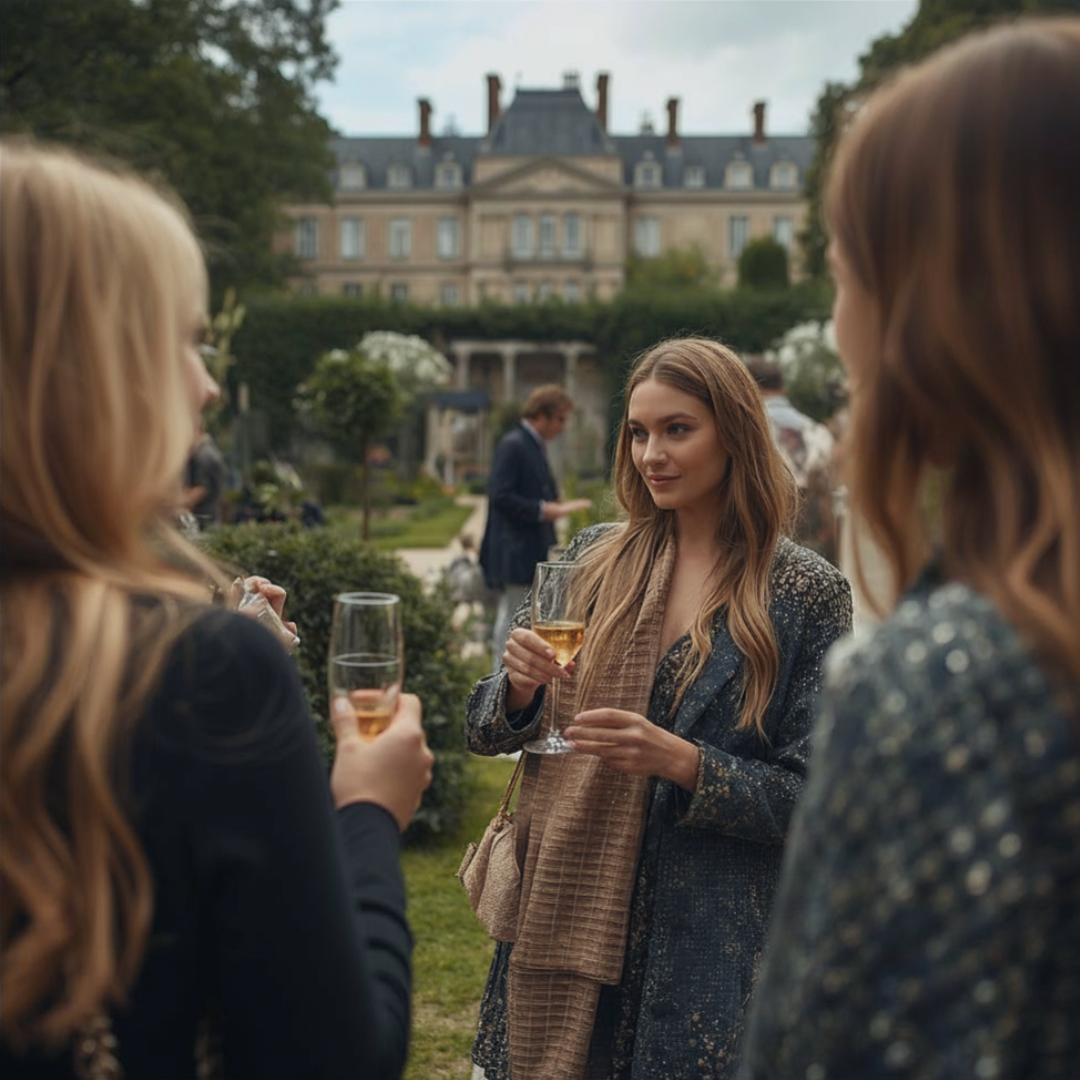
The concept of exclusivity has undergone a profound transformation in today's digital landscape. For premium and luxury brands, the challenge is no longer simply reaching their audience, but how to do so without diluting the prestige they have built over decades. It is for this reason that we must evaluate, in this context, Influencer Marketing not as a mass exposure tactic, but as a tool for emotional branding and strategic positioning.
According to recent data, the global influencer marketing industry is expected to reach $32.6 billion this year, with an average return on investment of $5.78 for every dollar invested1. However, in the premium segment, the rules of the game are radically different. We must not forget that the goal is not ubiquity; in fact, overexposure is luxury's greatest enemy. The strategy lies in scarcity, curation, and the perfect alignment of values between the brand and the content creator.
The luxury digital paradox: Visibility without Vulgarity
There is an inherent tension in influencer marketing for premium brands: global visibility is demanded, but mass-market appeal must be avoided at all costs. In the world of luxury, scarcity is the best strategy. Each collaboration with an influencer must function as a carefully curated exhibition that reinforces the brand's mythology, rather than diluting it through overexposure2; that is, we do not negotiate for the greatest possible reach or viral hooks for immediate consumption.
This paradox demands a fundamental shift in mindset: moving from measuring success in impressions to measuring it in Earned Media Value (EMV), in audience quality, and in the depth of the emotional connection generated. Brands that understand this distinction are those that succeed in building a digital legacy coherent with their luxury positioning.
It is for this reason that it is imperative to make a clear distinction between KOLs (Key Opinion Leaders) and Influencers, since from a digital strategy perspective, these distinctions could determine whether a campaign's results are successful or disastrous.
While an influencer transfers attention and visibility through their reach in terms of followers and audience, a KOL transfers authority, credibility and trust through their demonstrated expertise in a specific niche3, regardless of the number of followers they have on their social networks.
The following table summarises the implications of an Influencer and an Opinion Leader across five different dimensions:
TABLE 1: Influencer vs KOL
| Dimension | Influencer | KOL |
|---|---|---|
| Source of influence | Reach and emotional connection with the audience. | Professional authority and recognised expertise. |
| Type of content | Entertainment, trends, lifestyle... | Validation, analysis, expert recommendation... |
| Main KPI | Reach, impressions, superficial engagement, immediacy. | High-consideration conversions, Brand Equity. |
| Relationship with the brand | Transactional or short-term. | Strategic and long-term. |
| Ideal profile for luxury | Niche micro-influencers with curated audiences. | Authority figures in fashion, art, gastronomy, travel... |
We must remember at every step of a digital strategy that for the high-net-worth consumer (Ultra High-Net-Worth Individual or UHNWI), their purchasing decision is driven by belonging, status and the search for the authentic, meaning that the recommendation of a respected expert carries infinitely more weight than any conventional advertisement. The key lies in selecting voices whose credibility is perceived as genuine, not acquired.
Five strategies to maintain exclusivity in Influencer collaborations
1. Prioritising Value Alignment over Reach
The first and most critical decision in any premium influencer marketing strategy is selection. Luxury brands invest years building a perception of exclusivity, craftsmanship and identity, which is why collaborations that appear misaligned can damage the brand more quickly than they generate value4.
A recent report on consumer expectations shows that 67% of consumers perceive honesty and impartiality as key to the best brand-influencer collaborations5. In luxury, this translates into selecting creators whose aesthetics, values and audience already belong organically to the brand's universe; for example, a collaborator with 30,000 highly engaged and curated followers can generate more brand value than one with 3 million followers with a dispersed audience.
2. The strategic power of Micro and Nano Influencers
Contrary to what may be the initial intuition, the greatest return on investment in the premium sector frequently comes from smaller but intensely loyal audiences. The 2026 data is compelling: micro-influencers (10,000 to 100,000 followers) generate an average engagement rate of 3.86%, compared to 1.21% for mega-influencers, with an ROI of $7.14 for every dollar invested, the highest of all segments6.
These creators act as tastemakers, speaking to highly segmented communities in an intimate and personal way. For a premium brand, collaborating with niche profiles allows the perception of exclusivity to be maintained: the product is not perceived as mass-market, but as a secret shared among connoisseurs. Chanel, for example, works with micro-influencers selected for their aesthetic coherence and audience depth, not for their follower volume.
3. Long-term relationships: From Influencer to Ambassador
The premium consumer is highly sensitive to inconsistency. An isolated post lacks the authenticity needed to influence a high-value purchasing decision. For this reason, luxury houses are prioritising long-term relationships that transform content creators into true brand ambassadors.
The case of Dior and Leonie Hanne illustrates this principle with precision: the relationship between the Maison and the influencer spans years of presence at Haute Couture shows, exclusive beauty campaigns and high-impact editorials. The result is that Dior achieves 23% more engagement in posts featuring Leonie compared to its own brand content, generating an estimated EMV of $2.8 million per season7. The key is that the collaborator does not exhibit the brand; they embody it.
4. Exclusive Experiences as strategic content
The most advanced premium brands are designing immersive experiences specifically conceived to be documented by their ambassadors: access to private ateliers, invitations to invite-only experiences, meetings with the artisans who create the products, or participation in collection presentations before their public launch.
This approach transforms the influencer into the protagonist of a brand story, not an advertising channel. The resulting content highlights the craftsmanship, heritage and attention to detail — the narrative pillars of luxury. Cartier, in its collaboration with influencer Rahi Chadda, structured the deliverables around immersive experiences such as the Watches & Wonders salon in Geneva and global private dinners, achieving a 28% increase in positive sentiment towards the men's collection and surpassing the organic engagement of its own channels by 2.3 times8.
5. The metric that matters: Earned Media Value and Brand Equity
In luxury, evaluating the success of an influencer campaign transcends direct conversion metrics. EMV has established itself as the key indicator for measuring indirect impact in prestige campaigns: 83% of marketing professionals consider it the primary metric for evaluating ROI in this segment9.
The results of Paris Fashion Week 2026 illustrate the potential of this metric when the ambassador selection strategy is impeccable. Dior led the ranking with $90.5 million in EMV and an engagement rate of 5.7%, a 46% year-on-year increase, thanks to a strategic selection of APAC personalities whose engagement rates regularly exceed 10%10. The conclusion is unequivocal: expert curation of voices transforms an exclusive event into a global cultural phenomenon.
Conclusion: Choosing Intention over Exposure
In the universe of premium brands, collaboration with influencers must be designed with the same rigour devoted to the creation of the product itself. It is not about buying reach, but about partnering with voices that elevate brand perception, reinforce positioning and build the kind of desire that does not expire.
The selection of an influencer and/or KOL for a premium brand cannot be reduced to an analysis of superficial metrics; it requires a multidimensional evaluation that guarantees coherence with the brand's long-term positioning. In conclusion, you can use these keys to choose the ideal collaborator:
TABLE 2: How to choose the ideal collaborator
| Evaluation criterion | Key indicators | Warning signs |
|---|---|---|
| Aesthetic coherence | Consistent visual identity, high production quality | Frequent aesthetic changes, heterogeneous content |
| Audience quality | Active followers, demographics aligned with UHNWI | Large audience but with low real engagement |
| Selectivity of collaborations | Few brands, all premium or aligned | Multiple simultaneous collaborations with brands from different segments |
| Narrative depth | Product knowledge, sophisticated storytelling | Superficial content, focus solely on the product |
| Relationship history | Lasting associations with reference brands | One-off collaborations without continuity |
As we advocate at MH Experience, experience is today one of the most valuable assets a premium brand can offer. By integrating the right KOLs and influencers into emotional branding strategies and immersive activations, luxury brands not only reach their target audience: they invite them to become part of an exclusive narrative that is lived, felt and, above all, remembered.
"In luxury, the perfect collaboration is not announced: it is perceived." — MH
Would you like to discover how to integrate an influencer marketing strategy that protects and enhances the positioning of your premium brand? Contact us and let's design your next activation together.
References
- 1 Digital Applied, Influencer Marketing Statistics 2026: 150+ Data Points, April 2026. [https://www.digitalapplied.com/blog/influencer-marketing-statistics-2026-data-points]
- 2 Influencity, The Luxury Influencer Playbook: How Dior, Cartier, and Louis Vuitton Turn Exclusivity Into Currency, March 2026. [https://influencity.com/blog/en/luxury-influencer-playbook-dior-cartier-louis-vuitton-exclusivity-currency]
- 3 InfluenConnect, KOL vs Influencer: Key Differences Every Brand Needs to Know in 2026, April 2026. [https://www.influenconnect.com/post/kol-vs-influencer-key-differences-every-brand-needs-to-know-in-2026]
- 4 Social Life Magazine, How Luxury Brands Choose Influencers for Partnerships, June 2026. [https://sociallifemagazine.com/the-archive/how-luxury-brands-choose-influencers-for-partnerships/]
- 5 Sprout Social, 32 Influencer Marketing Statistics to Guide Your Brand's Strategy in 2026, April 2026. [https://sproutsocial.com/insights/influencer-marketing-statistics/]
- 6 Digital Applied, Influencer Marketing Statistics 2026: 150+ Data Points, April 2026. [https://www.digitalapplied.com/blog/influencer-marketing-statistics-2026-data-points]
- 7 Influencity, The Luxury Influencer Playbook: How Dior, Cartier, and Louis Vuitton Turn Exclusivity Into Currency, March 2026. [https://influencity.com/blog/en/luxury-influencer-playbook-dior-cartier-louis-vuitton-exclusivity-currency]
- 8 Ibid.
- 9 Ibid.
- 10 Influencity, Paris Fashion Week 2026: How Dior, Chanel and Louis Vuitton Turned Influencer Marketing Into Earned Media Value, March 2026. [https://influencity.com/blog/en/paris-fashion-week-2026-how-dior-chanel-and-louis-vuitton-turned-influencer-marketing-into-earned-media-value]
- inBeat Agency, 7 Luxury Brand Influencer Marketing Strategies To Crush Your ROI Goals in 2026, November 2025. [https://inbeat.agency/blog/luxury-brand-influencer-marketing-strategies]
More articles
Back to Blog