
The Future of Experiential Marketing in Luxury
How premium brands are transforming the customer experience through immersive events and innovative engagement strategies.
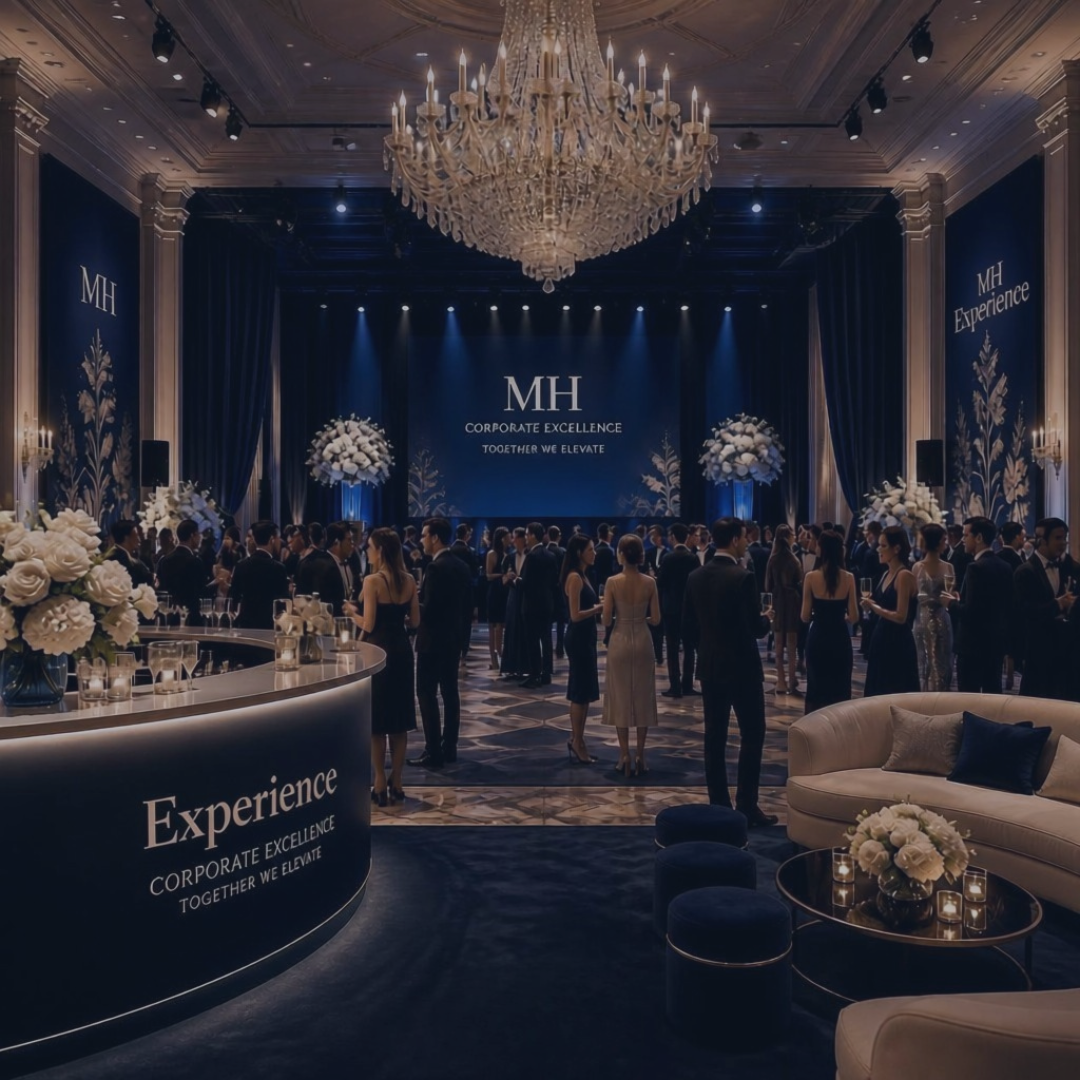
The concept of luxury has undergone one of its most profound transformations over recent decades. The era of ostentation and commercial transactions sustained solely by the prestige of a logo has given way to a more demanding and richer reality: the high-value consumer no longer buys a product, they buy an experience, a narrative, and above all, a sense of belonging. In this context, experiential marketing has consolidated itself as the true engine of growth and loyalty for premium brands.
The data confirms this market reorientation. According to the Euromonitor International report, experiential luxury grew 8% in 2025, reaching $103.4 billion, becoming the fastest-growing segment within a global industry valued at $1.5 trillion1. The Bain-Altagamma study, for its part, notes that in 2024 experiences recorded the highest spending growth of all luxury segments, with a 5% increase, as consumers redirected their investment towards travel, social events and wellness2.
The message for brands is unequivocal: the battlefield is no longer just the product, it is the experience.
From Logistics to Emotional Branding
For a long time, the corporate and luxury events sector was measured by the quality of its production: the spectacularity of the space, the excellence of the gastronomy, the precision of the protocol… Of course, all these elements remain necessary, but they are no longer sufficient. What distinguishes a truly premium experience from one that is simply well executed is the strategic intention that underpins it long before it is conceived.
Every element of the space — from the curation of the lighting to the sensory journey of the guest — must answer a fundamental question: What facet of the brand's identity are we making tangible here? If a detail does not communicate the firm's purpose, it is dispensable. This philosophy, which at MH Experience we call "intention before decoration", transforms the event into an emotional branding asset, not a representation expense.
The impact of this approach can be seen in concrete metrics: 85% of consumers say they are more predisposed to purchase after participating in an immersive brand experience, and 91% state that such experiences directly increase their purchase intent3.
Even more revealing is the data on memory: 78% of consumers remember a brand after an experiential interaction, compared to the fleeting nature of conventional digital advertising formats4.
It is for this reason that we can confirm that true luxury appeals to belonging, status and an intellectual and emotional connection that transcends rationality; and that the branding of premium firms must be built from consumer psychology, with great attention to detail and a clear intention at every touchpoint. The event, in this paradigm, is not the end of a strategy but its most powerful physical manifestation.
The most successful immersive activations are those that manage to transform the client from a passive spectator into the protagonist of the brand's story and that moment. This active participation is what generates bonds that unidirectional formats are incapable of creating.
63% of consumers say they feel a direct emotional connection with a brand after living an experience designed for them, and 87% indicate that live events make them feel more connected to the sponsoring firm5.
For the high-net-worth consumer, UHNWI (Ultra High-Net-Worth Individual), whose scarcest asset is time, the decision to attend a brand activation implies a significant expectation of emotional and symbolic return. As the Julius Baer report on the wealth and lifestyle market notes, this type of consumer seeks experiences defined by access to certain types of people, places and authentic moments; that which cannot be purchased in an "ordinary" way.
Although exclusivity remains the foundational pillar of luxury, its contemporary manifestation has evolved. The value of an "invite-only" event today also lies in its capacity to generate organic amplification among UHNWI audiences.
According to Seeker data, 98% of consumers create digital or social content during brand events, and 83% of them say they are more likely to share experiential moments on social media than any other type of advertising content.
It is for this reason that premium firms are designing moments specifically conceived to be captured and shared, thus transforming their most exclusive guests into the best brand ambassadors. An experience shared by a high-value client generates credibility that no paid media campaign can achieve; this is how the event becomes the origin of a conversation that extends weeks or months after its celebration, allowing the true emotional impact to be measured.
Invisible Technology: AI and Augmented Reality at the Service of Luxury
In a currently hyper-connected world, where the use of technology is so common in everyday life, in-person experiences are gaining more importance and strength than ever. This does not mean that technology should be set aside, but rather that it must be applied wisely to create memorable experiences.
The integration of technology in luxury events is not, nor should it be, an end in itself; it is rather a silent facilitator of exclusivity. The most advanced brands are using artificial intelligence platforms to capture every interaction during a private activation, transforming that data into customer intelligence that enables an exquisitely individualised treatment at every subsequent touchpoint.
Augmented reality, for its part, is redefining the physical and virtual spaces of premium brands. From smart fitting rooms that allow guests to request sizes or drinks, to projection installations/rooms that immerse the visitor in the firm's creative universe, technology integrates into the experience design in a way that amplifies the brand narrative without interrupting it.
The result are activations that generate up to 40% more dwell time and organic social media amplification that no advertising budget can replicate6.
We could, therefore, summarise that the luxury experiential marketing landscape in 2026 is marked by five transformation vectors that the most premium brands must and are already integrating into their strategy to maintain their relevance and leadership.
The 5 trends that will define the sector in 2026
| Trend | Description | Expected Impact |
|---|---|---|
| Hyper-personalisation with AI | Use of artificial intelligence to adapt the experience in real time according to each guest's profile. | 20-30% increase in engagement metrics7. |
| High-value hybrid events | Fusion of physical presence with digital layers that expand reach without sacrificing exclusivity. | Scalability without loss of premium perception. |
| Total sensory immersion | Design of spaces that activate all five senses as an extension of brand identity. | Greater dwell time and lasting brand recall. |
| "Money-can't-buy-it" experiences | VIP access, private meetings with creatives and unique, unrepeatable moments. | Loyalty and organic advocacy among UHNWI audiences. |
| Interaction data as an asset | Capture and activation of behavioural data during the event to nurture the relationship long-term. | Building sustained customer lifetime value (LTV). |
Conclusion: The luxury that is lived, is remembered
In the universe of premium brands, working with excellence is not a differentiator: it is the starting point. What truly distinguishes an experiential marketing agency focused on luxury is its capacity to look beyond the obvious, to deeply understand the client, their context, their history and the narrative of their firm before designing a single piece of the experience.
Every detail has an impact, and we must not forget that everything communicates; everything builds or destroys brand perception. This sensitivity to detail, combined with a clear strategy and impeccable execution, is what transforms an event into a transcendental moment that the client remembers, associates with the brand and, above all, desires to relive.
One of the most common mistakes in experiential marketing management is conceiving the event as an isolated element. A well-designed luxury event is not a one-off action: it is the climax of a forward-thinking, long-term corporate communication strategy. The conversation must begin long before the invitation and endure organically in the months that follow.
This continuity of narrative demands strategic vision, operational discipline and patience. The main challenge for premium brands is not to create the most spectacular event of the year, but to build long-term value through a sustained relationship with the client at every touchpoint.
The future of experiential marketing in luxury does not belong to the brands that invest the most in these experiences, but to those that invest better: with greater intention, greater understanding of the client and a greater capacity to build narratives that transcend the moment of the event. Experience is today the most valuable product a premium brand can offer, and designing it with the same rigour dedicated to an exceptional craft object is the key to leading in this new paradigm.
Experiential marketing is not the fastest engagement channel, but it is the deepest. - MH
At MH Experience we accompany premium brands in transforming their events into strategic emotional branding assets, because we understand that luxury is no longer exhibited: it is lived, felt and, above all, remembered.
Do you want to discover how to transform your next activation into an emotional branding asset? Contact us and let's talk about your project.
References
- 1 Euromonitor International, Luxury Reimagined: Five Trends Reshaping the Global Luxury Goods Market in 2025, Sep 2025. [https://www.euromonitor.com/article/luxury-reimagined-five-trends-reshaping-the-global-luxury-goods-market-in-2025]
- 2 Bain & Company, Luxury in Transition: Securing Future Growth, Jan 2025. [https://www.bain.com/insights/luxury-in-transition-securing-future-growth/]
- 3 Gitnux, Experiential Marketing Statistics, Jun 2026. [https://gitnux.org/experiential-marketing-statistics/]
- 4 Seeker, 26 Experiential Marketing Statistics Every Brand Should Know in 2026, Jun 2026. [https://seeker.io/blog/experiential-marketing-statistics/]
- 5 Ibid.
- 6 Reef Agency, Experiential Marketing Trends: Ultimate 2026 Guide, Jun 2026. [https://reefagency.com/experiential-marketing-trends-ultimate-2026-guide/]
- 7 Ibid.
- Talent Resources, Best Experiential Marketing Agencies for Luxury Brands, Jun 2026. [https://www.talentresources.com/best-experiential-marketing-agencies-luxury-brands]
- Julius Baer, The luxury of experience: how consumption habits are shifting — Global Wealth and Lifestyle Report, Aug 2025. [https://www.juliusbaer.com/en/insights/wealth-insights/wealth-report/why-has-luxury-shifted-from-ownership-to-experience-global-wealth-and-lifestyle-report/]
- Sagar Joshi, 70+ Experiential Marketing Statistics You Should in 2025, Dec 2024. [https://learn.g2.com/experiential-marketing-statistics]
More articles
Back to Blog