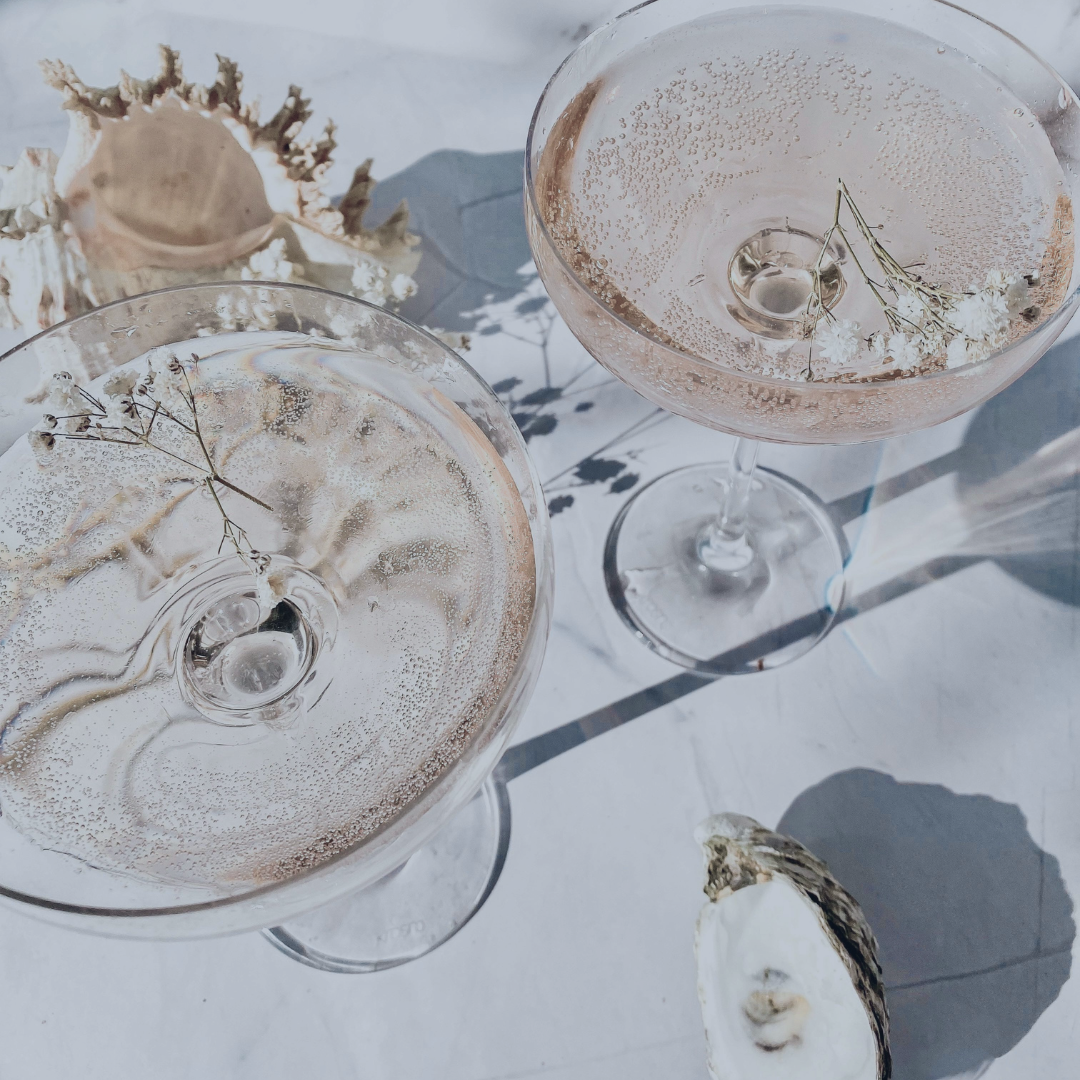
In the luxury universe, few categories concentrate so much sophistication in such a small volume. A 750-millilitre bottle can contain a hierarchy of centuries: the classification of a vineyard, the patience of ageing, the decision behind a vintage and the signature of a cellar master. Wine & Spirits is the category where luxury is drunk, shared and, above all, remembered.
Speaking about luxury drinks is not the same as speaking about high prices, but about time, origin and discernment. No marketing or advertising campaign can manufacture an unrepeatable vintage or a barrel that has rested for two decades. That condition —the impossibility of accelerating what is essential— makes the category one of the most eloquent in the sector: here, value is not declared; it is proven.
Bain & Company and Fondazione Altagamma place fine wines and spirits among the nine segments that make up the global luxury market, with an estimated value of €93 billion, despite a 5% decline in 2025 during a year of broad sector correction1. Read in perspective, the figure confirms a certainty the industry knows well: the desire for the exceptional endures better than the desire for abundance, and prestige sparkling wines and Italian reds performed best within the segment.
What is Wine & Spirits?
This category brings together two large families:
- - On one hand, wine: still, sparkling and fortified, with designations that operate as legal architectures of origin.
- - On the other, spirits: whisky, cognac, armagnac, tequila, mezcal, rum, gin and other expressions born of distillation and defined through maturation.
Within this territory, luxury does not occupy the entire market. The industry distinguishes three levels: everyday consumption; the premium and above segment; and the summit that IWSR, the leading global provider of beverage data and insights, calls status spirits, defined by a weighted average retail price above $100 per bottle2.
That economic threshold is useful, yet insufficient to describe the phenomenon. What makes a drink an object of luxury is not its price, but what makes it unrepeatable: the specific parcel, the variety, the oak profile, the minimum age and the number of bottles in existence…
In wine, the word cru does not name a commercial position; it names a place. In spirits, the term single —single malt, single cask— fulfils the same function: it points to an origin that cannot be replicated in another latitude.
That is why, when a drinks house rises to the luxury category, its way of presenting itself changes too: it no longer describes a product, it introduces a territory. And a territory is not explained with adjectives; it is tasted. This is why experiential marketing finds a natural field in Wine & Spirits, and why the sector requires more than a good narrative.
Origin: selection before market
The story of this category does not begin in a shop window, but at a table of experts. The most eloquent example is the 1855 Bordeaux Classification. For the Paris Universal Exposition, Emperor Napoleon III asked for French wines to be represented. The Bordeaux Chamber of Commerce delegated the task to the Syndicat des Courtiers, the wine-brokers’ organisation, which in barely two weeks placed 58 châteaux du Médoc in five tiers according to reputation and trading price. At the summit were four premiers crus: Lafite Rothschild, Latour, Margaux and Haut-Brion, together with a parallel classification for the sweet whites of Sauternes and Barsac3.
Two details of that exercise explain much of luxury’s later culture. First, the hierarchy was not born from a communication campaign, but from a price list prepared by those buying and selling every day. Second was its vocation for permanence: the brokers themselves warned they were not seeking to create an official ranking, but to offer an outline. Almost two centuries later, that outline still orders the fine-wine market, and the only formal revision —Mouton-Rothschild’s elevation to premier cru in 1973— took half a century of persistence4.
Champagne followed a parallel path, although its engine was the court rather than the cellar. In 1814, taking advantage of the collapse of the Continental Blockade, Barbe Nicole Clicquot Ponsardin —widowed at 27 and leading the house founded by her father-in-law in 1772— organised the shipment of her harvest to the Russian market at the very moment her competitors considered it impossible. The operation was a resounding success and placed the house at the centre of European courts within just two years.
In 1816, with the help of her cellar master Antoine de Müller, she perfected the remuage table, the technique that clarifies champagne in the bottle itself and made quality production and large-scale export possible. Madame Clicquot is also credited with the first known vintage champagne and the first blended rosé in history, while her epithet —the grand dama of Champagne— encapsulates how the drink ceased to be a regional product and became the language of European celebration5.
In Scotland, the impetus came through the legal framework: the consolidation of licensed distilleries from the 1820s onwards allowed an agricultural craft to become an authorial industry. The Macallan, founded in 1824 in the heart of Easter Elchies in Speyside, then made a decision that would define its character: to mature its spirit exclusively in oak casks seasoned with sherry in Jerez de la Frontera6,7.
Thus, a Scottish single malt was linked to the Iberian Peninsula through oak, grape and time.
Read together, these three episodes reveal the category’s true origin: it was not born of advertising, but of the confluence of three forces that remain in force: expert selection, able to order a hierarchy where there had only been production; real scarcity, derived from hectares, yields and vintages rather than a commercial decision; and the authority of time, the only asset no house can buy or accelerate.
Pillars of luxury drinks
Understanding why a bottle reaches the luxury category requires abandoning catalogue logic. Unlike other luxury goods, prestigious wines and spirits have an uncomfortable and valuable particularity: their existence precedes demand. They are not produced to answer an order; they are produced in the expectation that, years later, someone will understand why they were waited for.
Value is therefore built on five pillars that should be distinguished precisely:
- 1. Time: A vintage, ageing period, harvest or second fermentation is measured in years. The process permits neither shortcuts nor technological substitutes.
- 2. Origin: The parcel, cru, barrel and yeast define a profile that cannot be replicated elsewhere.
- 3. Structural scarcity: Volume is limited by hectares, yield and vintage before any commercial strategy exists.
- 4. Human hand: A chef de cave, cellar master or distiller signs off decisions no technology can replicate.
- 5. Ritual and permanence: Service, temperature, glassware and company turn a drink into an occasion; the bottle outlives its own consumption.
The fifth pillar deserves an additional observation because it distinguishes this category from almost any other in luxury: the object outlives its own use. A dress wears out, a journey ends, a perfume runs out. A bottle, by contrast, can remain closed for decades, appreciate in value and change owner without ever being uncorked.
That condition explains the existence of a sophisticated secondary market and the instruments that organise it. Since 2000, Liv-ex indices have tracked the world’s most traded wines with prices based on real transactions: the Fine Wine 100 is the secondary-market benchmark and the Fine Wine 50 follows daily the ten most recent vintages of Bordeaux’s five premiers crus8. That a region can be indexed in this way shows just how far time has become a measurable asset in this category.
A contextual nuance is also needed, because sophistication means reading the cycle and not only prestige. IWSR estimates that the global value of status spirits declined by 8% in 2024, with nearly $1 billion of value lost in the segment, an adjustment attributed to cyclical rather than structural factors, with a return to moderate growth expected over the next five years9. In parallel, Bain & Company and Altagamma describe a deeper shift in luxury consumption —from ostentatious possession toward experience— benefiting hospitality, gastronomy and everything lived before it is displayed10.
For a prestige drinks brand, both readings point to the same conclusion: the category’s value is not defended with more volume, but with greater precision in access, storytelling and service.
Keys to enjoying these elixirs like an expert
There is a widespread misconception that enjoying a drink like an expert means accumulating and memorising technical data. The real practice is the opposite: expert knowledge is recognised by its order.
Wine & Spirit Education Trust proposes precisely that in its systematic tasting method, a protocol that breaks evaluation down into successive stages —appearance, nose, palate and conclusions— so observation does not depend on enthusiasm or chance11.
Translated to a brand context, that order does not diminish pleasure; it multiplies it by turning intuition into a compatible experience.
Tasting like an expert: from context to conclusion
| Stage | What is observed | What it helps to understand |
|---|---|---|
| Context | Provenance, storage conditions, vintage, bottle number and serving temperature. | Whether what is about to be tasted is truly what is promised: rigour is part of pleasure. |
| Appearance | Colour, brilliance, clarity and density. In sparkling wines, the finesse and persistence of the bubbles. | Age and stage of evolution: the first reading of the elixir’s story. |
| Nose | Intensity, complexity and aromatic families: fruit, flower, spice, mineral, wood or ageing notes. | Origin and the trace of time. The nose reveals what the label cannot say. |
| Palate | Structure, acidity, tannin, sweetness, alcohol, body, texture and length on the palate. | Quality, harmony and balance: whether the whole is integrated or still evolving. |
| Conclusions | Hierarchy, optimum drinking moment, ageing potential and possible pairings. | What has been understood and can be shared. The expert closes the circle when they can explain it simply. |
To this protocol, add a dimension that is rarely taught and decisive in luxury: service discernment. Temperature, glass choice, surface, time allowed for oxygenation, the sequence in which references are served and even the silence reserved between one and another all modulate perception as much as the liquid itself. A chef de cave does not judge their work at the instant of uncorking, but when the wine reaches the expression for which it was conceived; the person serving assumes an equivalent responsibility.
There is also a dimension of credibility in this category that permits no shortcuts: verification. The luxury market has learned that provenance is proven, not asserted. When Sotheby’s presented the bottle of The Macallan 1926 with a Valerio Adami label in November 2023, the distillery had reconditioned it —new capsule and cork, re-adhered labels and a clinical analysis of the liquid compared with another bottle from the same year— and the condition of the contents was validated by the house’s master distiller12. That example became the benchmark for authenticating other 1926 bottles that may appear in the future: here, luxury consists of being able to prove that the exceptional is exactly what it claims to be.
The expert’s final skill is not analytical but relational. A person who masters tasting does not monopolise conversation or correct others’ perception; instead, they offer the right vocabulary, point out a detail others can recognise for themselves and leave room for another’s enjoyment. In luxury, authority is never imposed; it is recognised, and that distinction, which at the table separates a connoisseur from an arrogant person, is the same that separates a brand that instructs from one that accompanies.
Three elixirs, three territories
Every category is understood better through concrete cases. The following three belong to distinct territories —sparkling wine, still fine wine and malt spirit— and make it possible to observe how value is built in each without repeating the same logic.
Champagne
Dom Pérignon — vintage as its only grammar
Some houses build prestige on the continuity of a style and others on the succession of unrepeatable years. Dom Pérignon belongs to the latter: it produces vintage champagne only.
Since its first harvest, the house has had seven chefs de cave, from Ernest Goubault to Vincent Chaperon, who took on the role in 2019 after thirteen years alongside his predecessor, Richard Geoffroy13.
The style rests on four explicit pillars —vintage, origin, varietal profile and extended ageing on lees— and on a balance that has never depended on exact proportions, but on the fusion of chardonnay and pinot noir, which according to the year may lean towards one or the other14.
Since 2014, the more mature interpretation of these vintages has been organised in the P2 and P3 series, which are not simple reissues: the second fermentation takes place under cork and with lees aged longer, producing a wine different from the one released years earlier15.
The lesson from this house is clear: when time is the principal working material, identity is built through choice. Every vintage is a statement about a year that will not return, and prestige does not come from regularity of production, but from the coherence of a decision repeated for more than a century.
Wine
Château Margaux — inherited hierarchy
If champagne is defined by vintage, great cellar wine is defined by place. Château Margaux is among the four premiers crus that led the 1855 classification and, since then, its name has served as a benchmark for the Médoc.
Its patrimonial condition also extends to architecture: the house has not altered its main building since Louis Combes conceived it at the beginning of the nineteenth century.
When the estate decided to add new facilities, it turned to Norman Foster to build a vinification cellar and an underground library of past-vintage bottles, with the requirement that the exterior harmonise with the nineteenth-century building while the interior be decisively contemporary; the former cooperage thus became a tasting room and the cooperage returned to its original nineteenth-century location16.
Its value is also visible in the way the market treats it. Liv-ex’s Fine Wine 50 tracks daily the ten most recent vintages of the five Bordeaux premiers crus, and Margaux is one of them.
Being inside an index means something very specific in brand terms: the market does not consider it a product to be consumed, but an asset that is preserved, inherited and passed on.
Whisky
The Macallan — time declared
In Scotland, luxury is expressed through a number. The Macallan, founded in 1824 in Speyside, matures in sherry-seasoned oak casks, where it presents age as the central argument of its proposition.
The culmination of that logic is the 1926 vintage, of which forty examples were bottled in 1986, becoming the oldest vintage ever produced by the distillery. Some of those bottles were not sold to the public, but offered to its leading clients. Over the years, their appearance at auction has repeatedly rewritten market records17.
In November 2023, an example carrying a label by painter Valerio Adami sold at Sotheby’s for £2,187,500, almost double the top estimate, establishing a record for a bottle of wine or spirit18.
The case illustrates an uncomfortable yet powerful principle of contemporary luxury: true scarcity is not manufactured; it is documented. The house did not create forty bottles to generate desire; forty bottles were the inevitable result of a barrel and a bottling decision in 1986. Their current value arises from that unrepeatable combination and traceability, and is reinforced each time the market confirms what the product already was.
From the glass to the brand experience
The three houses above share something essential: none invented its value in a campaign; they found it in time, place and one person’s decision, and their communication has been limited to making visible what already existed. For an experiential marketing agency, that observation is also a warning: in this category, experience cannot replace the product or exaggerate its promise. Its function is more precise: to make it verifiable.
This leads to formats with their own logic:
- - A vertical tasting does not present one vintage; it narrates the evolution of a decision over time.
- - Conversation with a chef de cave, cellar master or distiller moves discernment from the label to the person.
- - A visit to the cellar or access to a space usually kept closed turns origin into a physical coordinate.
- - Pairing, when designed precisely, turns gastronomy into a sensory explanation of territory.
- - A reserved invitation —a limited allocation, a preview, a numbered bottle— reproduces in the experience the same logic of access already held by the product.
This approach also requires measuring what matters. The number of glasses served or registered guests describes an event, not a relationship. Depth appears in other indicators: which detail guests mention without being asked, how many ask to go deeper into the origin or vintage, whether price perception becomes stronger after the encounter, whether the conversation continues weeks later. In a segment that, according to IWSR, faces more fragmented competition and limited space in the buyer’s mind, the shared memory of an experience is the only territory a brand can occupy without competing for space.
A precision is due here, one the category demands and the sector has learned to integrate naturally: excellence in Wine & Spirits is communicated through knowledge and moderation, not through exhortation to consume. A well-designed brand programme educates, informs and accompanies; it offers alcohol-free alternatives for those who prefer them and places responsibility within the criterion of selection itself. That coherence does not weaken desire; it elevates it because it aligns it with the respect the category has always required.
Conclusion: drink with discernment, serve with intention
Wine & Spirits is probably the luxury category where the distance between the object and its story is smallest. In perfumery or fashion, a narrative may precede the product and sustain it for a time. In prestigious wines and spirits, that is impossible: the bottle already contains all the information. The only thing a brand can do is offer the conditions for that information to be perceived.
That is why the category’s strongest houses do not compete for attention, but for discernment. They teach audiences to recognise origin, time and craft; they convene clients in spaces where knowledge can be lived and accompany tasting with service that respects the elixir’s rhythm.
When that coherence is maintained, the experience ceases to be a promotional action and becomes part of the product: the bottle opens in a context that was already part of its value.
“Luxury in a glass is not measured by what it costs, but by how long it takes to exist.” — Mayra Hernández
At MH Experience, we design brand programmes that translate origin, time and craft into sensory journeys that are coherent, memorable and respectful of the product promise. Shall we turn your brand into an experience that can be tasted?
References
- 1 Bain & Company y Fondazione Altagamma (Dec 2025), Finding a New Longevity for Luxury, Sep. 2026. [https://www.bain.com/insights/finding-a-new-longevity-for-luxury/]
- 2 IWSR (Oct 2022), The Luxury Spirits Market: Key Growth Drivers, Sep. 2026. [https://www.theiwsr.com/insight/the-luxury-spirits-market-key-growth-drivers/]
- 3 Matthews, Thomas (Mar 2019), The 1855 Bordeaux Classification, Wine Spectator, Sep. 2026. [https://www.winespectator.com/articles/the-1855-bordeaux-classification-3491]
- 4 Ibid.
- 5 Veuve Clicquot, Madame Clicquot, la grande dame de Champagne, Sep. 2026. [https://www.veuveclicquot.com/en-us/madameclicquot.html]
- 6 The Macallan, A Celebration of Our Past, Present and Future, Sep. 2026. [https://www.themacallan.com/en-us/inside-the-macallan/our-estate/a-celebration-of-our-past-present-and-future]
- 7 The Macallan, The Six Pillars, Sep. 2026. [https://www.themacallan.com/en-us/about/the-six-pillars]
- 8 Liv-ex, Indices, Sep. 2026. [https://www.liv-ex.com/resources/indices/]
- 9 IWSR (Oct2025), Status spirits decline more cyclical than structural, Sep. 2026. [https://www.theiwsr.com/insight/status-spirits-decline-more-cyclical-than-structural/]
- 10 Bain & Company (Nov 2025), Global luxury stays resilient despite economic headwinds and shifting consumer trends that reshape market, Sep. 2026. [https://www.prnewswire.com/news-releases/global-luxury-stays-resilient-despite-economic-headwinds-and-shifting-consumer-trends-that-reshape-marketbain--company-and-altagamma-302620818.html]
- 11 Wine & Spirit Education Trust (WSET), Systematic Approach to Tasting (SAT), Sep. 2026. [https://www.wsetglobal.com/knowledge-centre/wset-systematic-approach-to-tasting-sat]
- 12 Mchayle, Anika (Nov 2024), The Macallan Valerio Adami 60 Year Old: Revisiting the Most Expensive Whisky Ever Sold, Sotheby’s, Sep. 2026. [https://www.sothebys.com/en/articles/the-macallan-valerio-adami-60-year-old-revisiting-the-most-expensive-whisky-ever-sold]
- 13 Stevenson, Tom (Aug 2025), The DNA of Dom Pérignon, The World of Fine Wine, Sep. 2026. [https://worldoffinewine.com/news-features/dom-perignon-dna-chefs-de-caves]
- 14 Ibid.
- 15 Ibid.
- 16 Anson, Jane (May 2015), Norman Foster commissioned to revamp Château Margaux cellars, Decanter, Sep. 2026. [https://www.decanter.com/wine-news/lord-foster-to-revamp-chateau-margaux-cellars-24773/]
- 17 Mchayle, Anika (Nov 2024), The Macallan Valerio Adami 60 Year Old: Revisiting the Most Expensive Whisky Ever Sold, Sotheby’s, Sep. 2026. [https://www.sothebys.com/en/articles/the-macallan-valerio-adami-60-year-old-revisiting-the-most-expensive-whisky-ever-sold]
- 18 Ibid.