
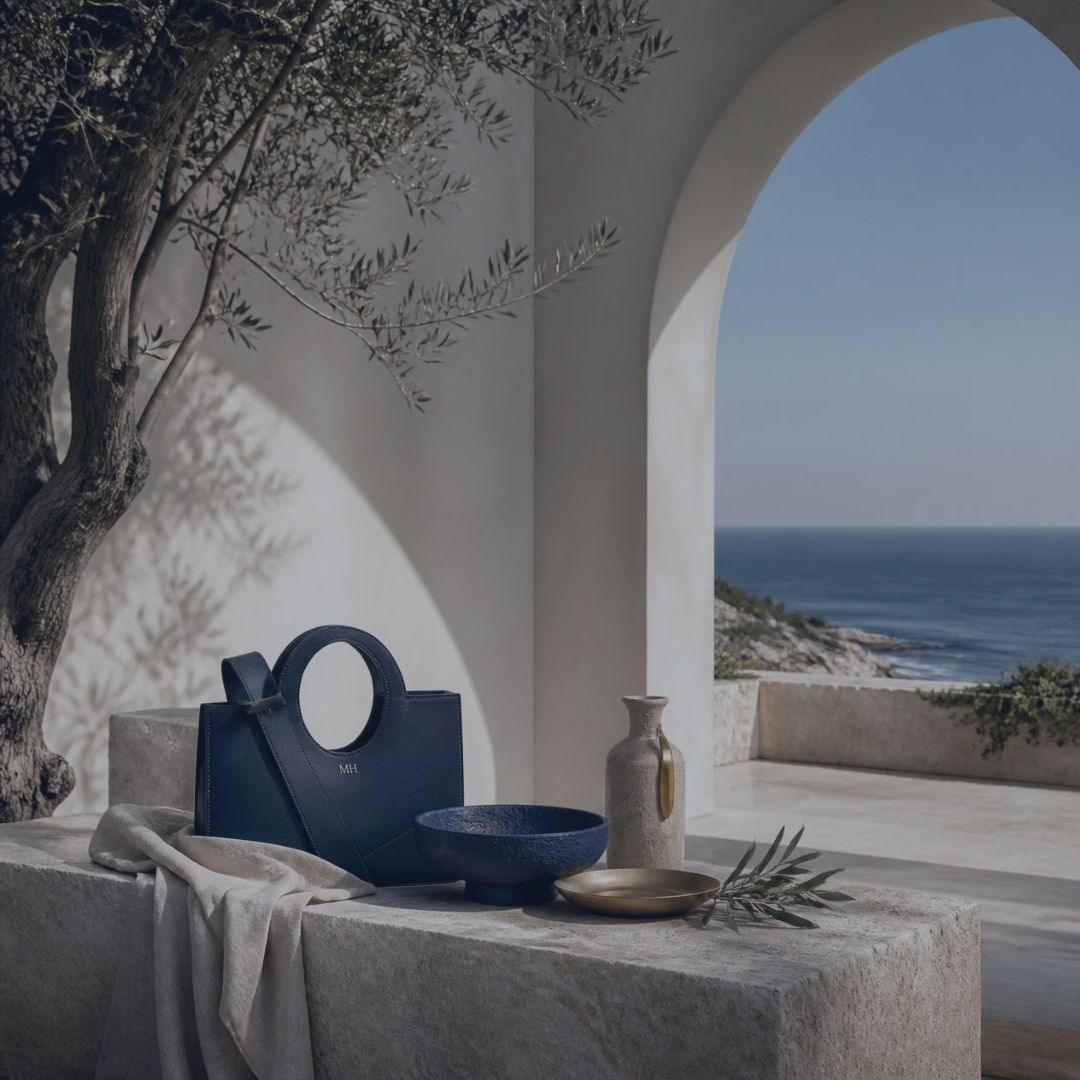
In premium and luxury brands, value does not always increase when another stimulus, visual layer or technological intervention is added. In fact, value often increases when a brand knows what to leave out. This is the discipline proposed by Quiet Luxury: an expression of luxury built on subtlety, craftsmanship and the confidence not to show everything at once.
Applied to experience, this concept does not mean designing austere events or emptying spaces of emotion. It means choosing one central idea rather than five simultaneous messages; one truthful texture instead of saturated scenography; or a welcome that makes the guest feel expected rather than observed.
This perspective is especially relevant at a time when the sector needs to recover genuine differentiation. Bain & Company and Fondazione Altagamma note that luxury brands must once again place creativity, quality and purpose among the non-negotiable pillars of their value proposition1. For experiential marketing, that precision translates into more intentional journeys, more attentive hospitality and clearer memories.
More than an aesthetic: a way of directing attention
A superficial reading of Quiet Luxury reduces the concept to neutral visual codes, discreet logos or a certain chromatic restraint. Its most essential principle, however, is neither aesthetic nor uncontrolled minimalism; it is much deeper. This is even more so when the concept moves into Brand Experience: here, the brand does not compete to dominate every second of attention, but to create the conditions for the guest to perceive value independently.
Guided by that essential principle, a question that has become very common in recent years must change. It is not about deciding how many “Instagrammable” spaces or moments an event should have, but about identifying the gesture no one else could offer with the same truth. It may be a conversation with an artisan, the opening of an archive, the scent of a raw material, access to a space that normally remains closed, or a service ritual performed with almost imperceptible precision.
The real aim of a Brand Experience applying Quiet Luxury is not to impress through accumulation or ostentation, but to make a brand conviction visible. Contrary to what one might think, this does not mean designing or producing less. The process demands much more editing, attention and coordination, because every element that remains or forms part of it must serve a clear purpose: to guide, anticipate, reveal, move or extend the relationship. Music, for example, is not generic background or filler for silences, but part of the event’s rhythm; lighting does not “decorate”, but directs the gaze; gastronomic selection does not fill a pause, it expresses a territory or a technique.
Giving heritage value
Heritage gains depth when it stops being a narration and becomes an experience. In other words, a Maison’s heritage should not be presented as a chronology that audiences listen to from beginning to end. Its true value appears when a person can understand through the senses why that story still matters today.
The Hermès in the Making project illustrates this idea precisely. In its Istanbul 2025 edition, the house brought together artisans from around ten crafts and articulated the journey through live demonstrations, workshops, interactive activities and films2. The most significant decision was not to repeat a promise of craftsmanship in an institutional speech, but to let the visitor observe the gestures, materials and time that sustain that promise. Technique thus became tangible proof of quality, longevity and innovation.
LOEWE, for its part, used a similar logic in Crafted World in Tokyo. Presented as the house’s first major exhibition, the show travelled through 179 years of creativity via an immersive experience conceived with OMA, where art, culture and play became pathways into the house’s heritage3.
The lesson from these two houses is not to reproduce a large-scale exhibition, but to understand that heritage gains force when it is offered as discovery rather than declaration.
For a smaller-format activation, this principle can —and should— be translated just as powerfully. For example:
- - A perfume house can invite guests to smell a raw material before presenting the fragrance.
- - A jewellery brand can reveal the setting work through an intimate conversation with the master who performs it.
- - A hospitality house can build the welcome around a local gesture rather than a standardised reception.
In all three cases, the audience does not receive a fact about origin; it recognises it firsthand.
The dramaturgy of a luxury experience
Every memorable experience needs a structure: a beginning that situates the guest, a progression that awakens curiosity, a sense of discovery and an ending that preserves what has been lived. This logic directly connects a luxury campaign with experiential marketing: both work with a sequence of attention, meaning and memory.
The experience economy, formulated by B. Joseph Pine II and James H. Gilmore, argued as early as the last century that companies create value when they stage memorable events, not when they merely offer goods or services4. In luxury, this principle requires an additional layer: the event must be memorable without seeming forced. It must retain mystery, rhythm and room for interpretation.
The journey can be understood as a choreography of seven moments:
- Arrival inaugurates the bond. What is needed is not a spectacular reception, but a clear transition between the outside world and the brand universe.
- Anticipation creates a small distance between what is expected and what will be revealed or experienced.
- Discovery turns the guest into a participant: they do not receive a complete explanation, but find a clue, open a door, recognise a process…
- Immersion allows the senses to confirm the promise.
- The emotional peak, or climax, need not be noisy; it may be the moment when an artisan explains a decision, a piece is revealed in the right light, or a family story finds its meaning.
- Departure must rise to the level of arrival. It is very common in a luxury event to invest all energy in the central moment and turn farewell into a logistical operation. Quiet Luxury proposes the opposite: the final gesture must feel considered, because it is the first thing that accompanies the guest outside the space.
- Only then does the most important stage begin: memory. An experience becomes a brand asset when it can be remembered and retold with precision.
The following table offers a guide to applying these seven stages to an event viewed through the lens of Quiet Luxury:
| Moment | Design question | Translation from Quiet Luxury |
|---|---|---|
| Arrival | What should the guest feel before understanding the proposition? | Design a serene arrival, with a precise welcome signal and a hospitality that recognises without intruding. |
| Anticipation | What is suggested without being fully explained? | Use an invitation, a material clue or a shift in atmosphere that opens a selective expectation. |
| Discovery | Which detail turns curiosity into attention? | Reveal a technique, an origin or a space gradually; allow the guest to arrive at the conclusion independently. |
| Immersion | How does the brand universe feel beyond how it looks? | Coordinate material, sound, rhythm, temperature, scent and conversation so that the concept acquires substance. |
| Emotional Peak (Climax) | Which moment concentrates the meaning? | Reserve a revelation, a human encounter or a service gesture that makes the Maison promise visible. |
| Departure | How does it end without undoing the atmosphere created? | Turn the departure into a final act of consideration: a useful object, a personal note or discreet accompaniment. |
| Memories | What will the guest be able to tell afterwards? | Extend the relationship through editorial content, personal follow-up or a ritual that connects the memory with the next chapter. |
Luxury campaign and experiential marketing as a single narrative
A luxury campaign often builds desire through image, tone and promise. A brand experience turns those codes into a real situation. For this reason, they should not be treated as isolated disciplines. The campaign prepares the audience’s emotional disposition; the activation confirms the story; follow-up turns the moment into a relationship.
Imagine the launch of a collection inspired by Mediterranean architecture. The campaign may begin with images suggesting shade, stone, lime and light. The activation, however, should not repeat those images on large-format screens. Its purpose is to translate them: to receive the guest in a space where light changes with the journey, where a quarry piece reveals the reference texture, where gastronomic conversation explains a landscape, and where the collection appears as a natural consequence of that universe. The campaign promises a sensibility; the experience allows guests to inhabit it.
The same criterion should guide the subsequent phase. Rather than sending every attendee a generic recap, a brand can share an editorial selection of details discovered during the evening, a conversation with the creative, or a reserved invitation to continue the journey. Memory is not managed through communication volume, but through relevance. In this way, the campaign does not end when the installation is dismantled; it finds a second life in the story each guest keeps.
Five decisions for designing a quieter, more memorable luxury experience
1. Define a single irreducible idea. Every experience needs an internal sentence that answers a simple question: what should someone understand or feel when they leave? If the answer is too broad, the programme is likely to be as well. A house with a strong craft tradition may choose “time as proof of excellence” and let every decision —the invitation, journey, conversation and farewell detail— develop that one idea.
2. Turn craft into an experience, not decoration. It is not enough to place tools, archive photographs or references to savoir-faire. The guest must be able to perceive a concrete consequence of craft: the pressure of a hand, the difference between two finishes, the patience of a technique or the reason a material requires particular care. Heritage becomes contemporary when it reveals intelligence applicable to the present.
3. Choreograph rhythm before content. A programme with too many verbal interventions can weaken an excellent narrative. It is preferable to alternate observation, conversation, pause and revelation. Silence used well is not an absence of activity; it is the space that allows an emotion to settle and a detail to find meaning.
4. Personalise with discretion. Personalisation in luxury does not consist of displaying data about the guest; it consists of demonstrating informed attention: remembering a preference, offering a relevant conversation or adapting a hospitality gesture without theatricalising it. The person should feel recognised, not analysed.
5. Measure depth, not only diffusion. Reach, attendance and shared content remain useful, but they are not sufficient. It is worth observing which detail guests mention without being asked, which conversation continues days later, how many ask to go deeper into the story, or how perception of the brand changes after the encounter. The strategic question is not only how many people attended, but what they will be able to tell afterwards and why that memory matters to them.
Conclusion: leave room for desire to do its work
Applying Quiet Luxury to a Brand Experience does not mean diminishing a house’s ambition; it means replacing ostentation with precision. A luxury experience can be intimate or monumental, urban or located in a landscape, technically complex or apparently simple. What matters is that every decision responds to the same truth and that nothing competes with it.
When arrival at an event awakens anticipation, the journey sustains discovery, immersion gives body to the story and closure protects memory, the experience stops being a succession of stimuli and becomes a lived campaign. This is the most powerful connection between luxury campaign and experiential marketing: both can build desire, but only a carefully designed experience can prove that the brand promise is real.
“In luxury, the most memorable experience is not the one that occupies the most space; it is the one that leaves the most precise trace.” — MH
Shall we design an experience that makes your brand’s essence tangible?
At MH Experience, we transform heritage, purpose and brand codes into sensory, memorable journeys for premium audiences.
References
- 1 Bain & Company y Fondazione Altagamma (Dec 2025), Finding a New Longevity for Luxury, Sep. 2026. [https://www.bain.com/insights/finding-a-new-longevity-for-luxury/]
- 2 Hermès (Oct 2025), Hermès in the Making in Istanbul, sep 2026. [https://www.hermes.com/us/en/content/340839-hermes-in-the-making-turkey/]
- 3 LOEWE (May 2025), Crafted World Tokyo, Sep. 2026. [https://www.loewe.com/usa/en/pd/stories-projects/crafted-world-exhibition.html]
- 4 Harvard Business Review (Aug 1998), Welcome to the Experience Economy, Sep. 2026. [https://hbr.org/1998/07/welcome-to-the-experience-economy]
- EDHEC Vox (Jan 2025), During uncertain times, for luxury clients: quiet is the new loud, Sep. 2026. [https://www.edhec.edu/en/research-and-faculty/edhec-vox/during-uncertain-times-luxury-clients-quiet-is-the-new-loud]